What do I investigate?
Organizational and citizen communication, audience engagement and public accounts of human–AI relationships.

I study public communication using computational text analysis, experiments and quantitative methods.
 Question first.
Organizational and citizen communication, audience engagement and public accounts of human–AI relationships.
Message features and audience responses in platform data; hypotheses in experiments; the performance of AI-assisted coding.
Guided notebooks, model comparison and prototype development, with revision through feedback.
02 / RESEARCH PIPELINE
Two research streams connect through computational measurement, quantitative analysis and experimental designs selected for each research question.
THREE DISSERTATION CHAPTERS
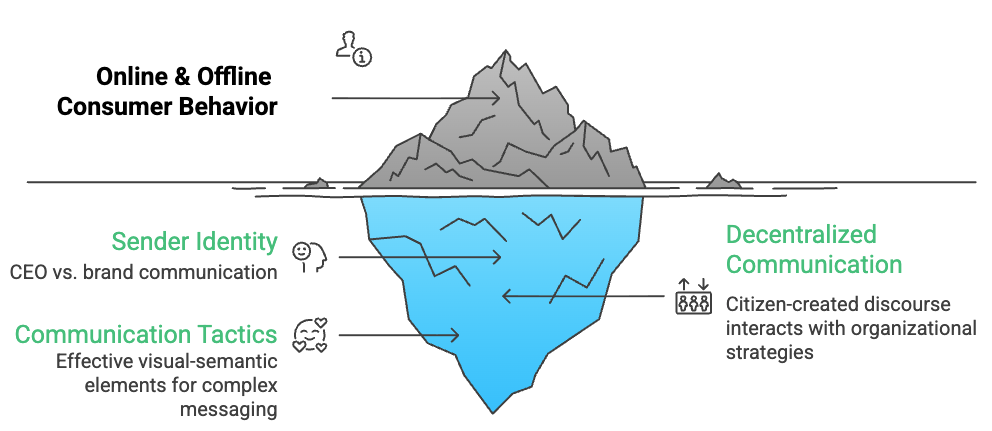
Context: Russia–Ukraine war.
Comparison: CEO versus brand; self versus other framing; informational versus emotional appeal.
Outcomes: engagement and digital activism.
Context: brand DEI decisions.
Comparison: pro- or anti-DEI political user-generated content (PUGC) × brand strategy.
Outcomes: engagement, motive attributions and brand responses.
Context: brand communication about Sustainable Development Goals.
Message feature: symbolic and iconic emojis.
Outcome: consumer engagement.
CURRENT RESEARCH PIPELINE
Sender identity, political user content and message features in relation to audience engagement and responses.
AI empowerment framing, public accounts of human–GenAI interaction, and platform access in consumer AI.
SHARED METHODOLOGY
Corporate posts and videos · political user content · public accounts of human–AI interaction
Theory-informed codebooks · LLM classification · BERT stance models · human-coded evaluation
Statistical models of field associations · experiments testing effects · sensitivity analysis
03 / THE MESSY WORK OF RESEARCH
A research-task exercise adapted from Messy Jobs. Discuss task specification, contextual interpretation and responsibility; then compare your choices with a suggested mapping.
Specified inputs, rules and outputs. Automation can be checked against explicit criteria.
Task definitions or interpretations need revision through contextual and methodological judgment.
Researchers remain accountable for design, interpretation and reporting across all three tiers.
A CONVERSATION STARTER
There is room for disagreement: the tier can change with the research question and the risk of an error.
Inspired by Messy Jobs ↗ · Luis Garicano · Jin Li · Yanhui Wu
04 / THREE WORKING PLATFORMS
Collection and publication workflows support research on AI communication, framing and political user content.
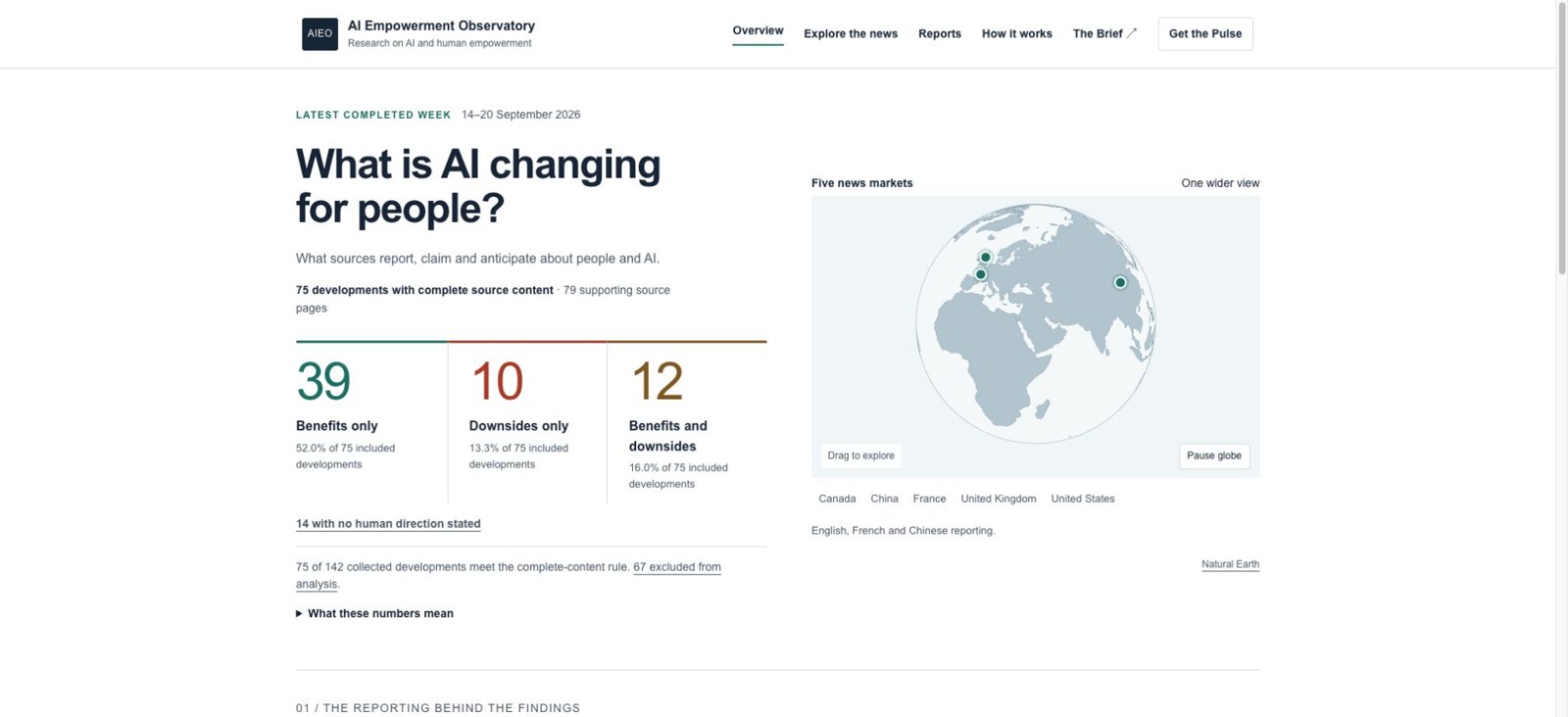
Separate event and coverage records make AI developments and their reporting traceable.
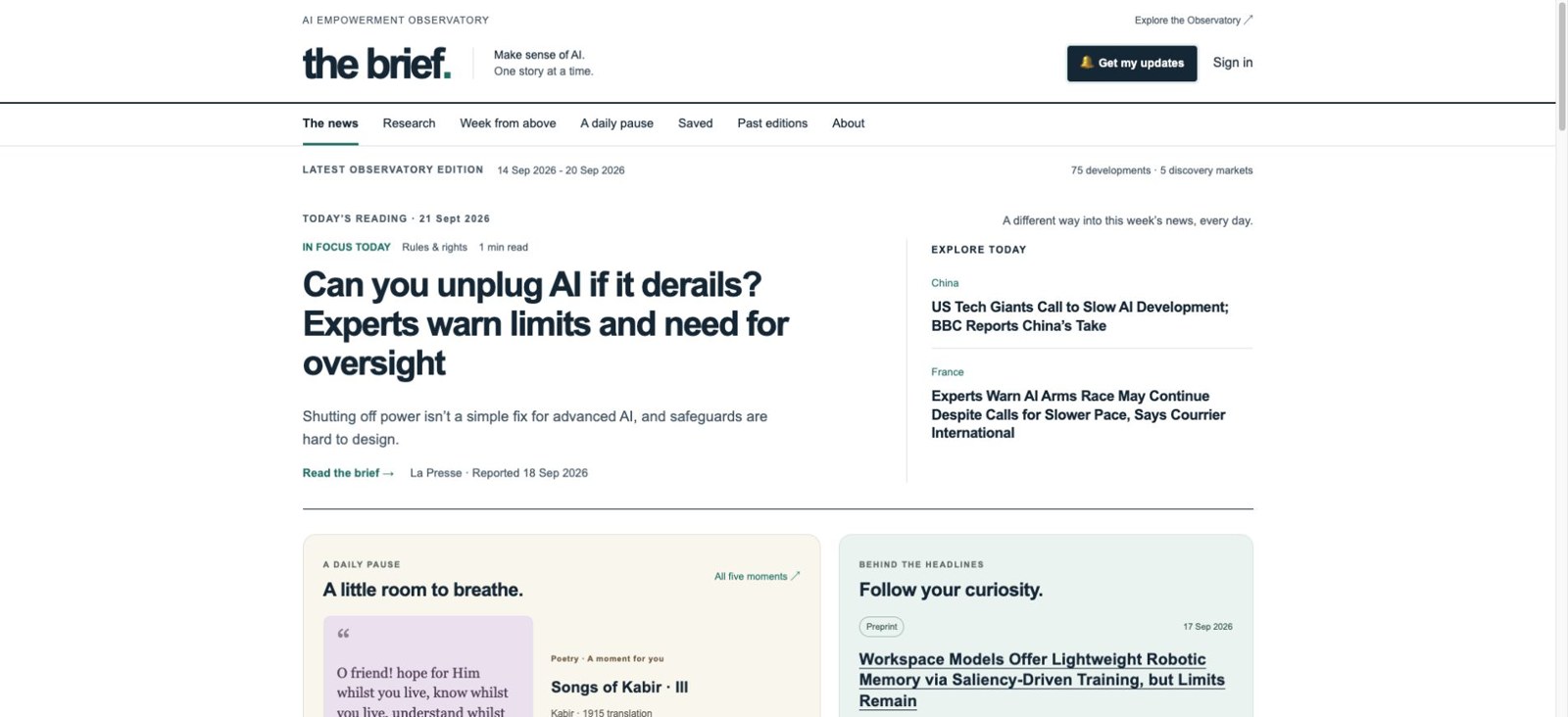
Accessible, source-linked AI news provides material for audience research.
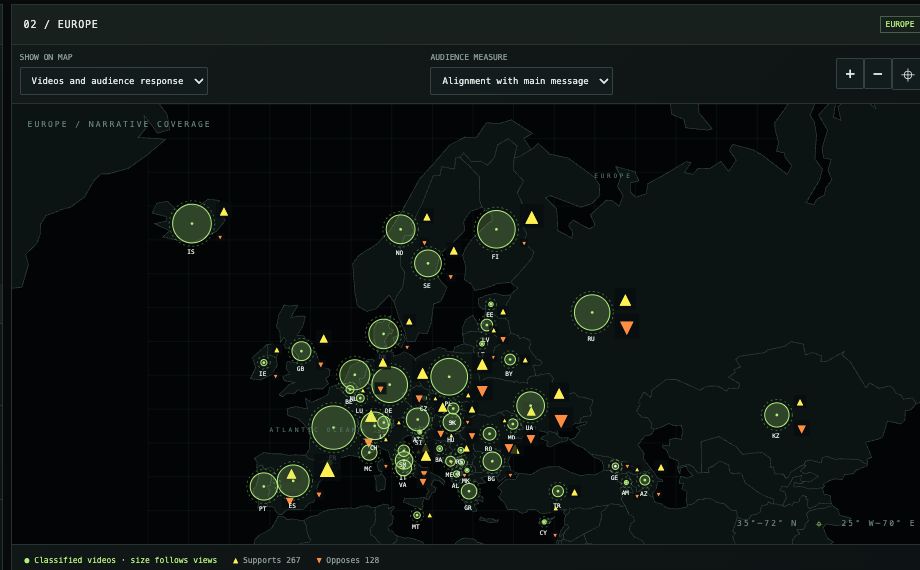
A setting for studying naturally occurring political communication and audience responses.
05 / WHY I CHOOSE FHS · TOGETHER
LOOKING AHEAD, TOGETHER